


Screw Sort Fix Match Puzzle
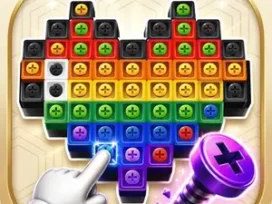
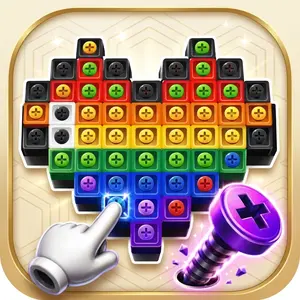
Mobile logic games have taken a mechanical turn, and the Screw Sort Fix Match Puzzle style of gameplay sits right at the center of the trend. If you have opened one of these games recently, you already know the setup: colorful metal plates, overlapping bars, wooden planks, and threaded bolts holding everything together.
At first glance, it feels like a simple sorting exercise. Tap a bolt, drop it into a box or an open hole, and watch pieces fall away. Within five or ten levels, however, the board becomes a tight spatial challenge. If you place just two bolts into the wrong holding slots, the entire board locks up, leaving you staring at a failed screen.
Understanding how the mechanics work and building a repeatable plan makes the difference between burning through power-ups and clearing boards cleanly.
What Is a Screw Sort Fix Match Puzzle?
A screw sort fix match puzzle combines two classic mobile puzzle formats: physical disassembly and color sorting.
Instead of simply moving blocks on a grid, you interact with layered hardware:
- Fasteners: Screws, pins, or bolts anchored across one or more panels.
- Plates: Strips of metal, acrylic, or wood that hang in front of each other.
- Collection Boxes: Color-coded containers that require a specific number of matching screws (often three of the same color) before they clear out.
- Holding Holes or Trays: A limited set of temporary empty slots (usually 3 to 5) where you can park unmatched screws.
Your goal is straightforward: remove all screws, sort them into their designated color bins, and let every loose panel drop cleanly off the screen.
The Core Rule: Layer Physics vs. Tray Space
Most players lose not because they misunderstand gravity, but because they run out of parking space. The game creates tension between two competing rules:
- The Layer Dependency: You cannot unscrew a bolt if another plate is pinning it or blocking its clearance. You must work from top layers down to bottom layers.
- The Buffer Limit: You have very few open slots. When your active collection boxes are looking for blue and yellow, but every visible screw on top is green or purple, every bolt you touch gets stranded in your temporary tray.
- Once all your temporary slots fill up with mismatched colors, you can no longer pull screws out of the board. The board freezes, and you are forced to restart or spend coins.
Practical Strategies to Clear Hard Levels
1. Count Screws Before Your First Tap
Before touching the screen, spend five seconds scanning the board. Look at your active collection boxes. If you have a red box needing three screws, make sure three red screws are actually reachable on the surface. If only two are exposed and the third is buried behind three metal layers, do not commit to that red box yet if doing so clogs your active queue.
2. Free the “Single-Pin” Plates First
Scan for any bar or plate held in place by only one remaining screw. Removing that single screw lets the entire piece swing or drop off the board immediately. This instantly exposes underlying holes and uncovers bolts that were previously trapped. High-value moves always eliminate plates rather than just loosening them.
3. Protect Your Buffer Holes Like Gold
Treat empty tray holes as emergency currency. Never place a screw into a temporary hole unless that move directly unlocks a matching screw to clear a slot. If you have five slots, try to keep at least two open at all times. Once you drop down to your last free slot, your room for error drops to zero.
4. Watch for Swinging Hazards
In physics-heavy variations of the game, unscrewing one end of a plate causes it to pivot on its remaining bolt. If you remove an upper screw carelessly, the loose end can swing downward across an open hole, physically blocking you from placing another screw there. Always check the center of gravity before loosening a joint.
When to Use In-Game Boosters
Most games in this genre offer three standard boosters:
- Extra Hole / Slot: Permanently adds an extra spot to your temporary tray for that stage. Save this for levels with six or more distinct colors.
- Undo: Rewinds your last action. Use this the moment a dropped plate blocks a critical hole you planned to use.
- Clear Tray / Color Hammer: Empties stranded screws out of your temporary tray. Use this only when you are one move away from clearing the level but got bottlenecked by a full tray.
Why did my screw match puzzle suddenly freeze?
Your temporary storage tray ran out of open slots. When your tray is full, and no active collection boxes can accept the screws currently visible, no valid moves remain.
Can all levels be beaten without paying for coins or boosters?
In properly balanced versions, virtually every standard level has a deterministic, logical sequence that does not require boosters. Boosters are lifesavers when you make a sequencing error, but clean board analysis solves the layout naturally.
What is the best opening move on a crowded board?
Look for screws that hold the outermost overlapping plates, or plates with only one screw left. Dropping those panels early opens up clear lines of sight to the rest of the board without consuming your storage slots.